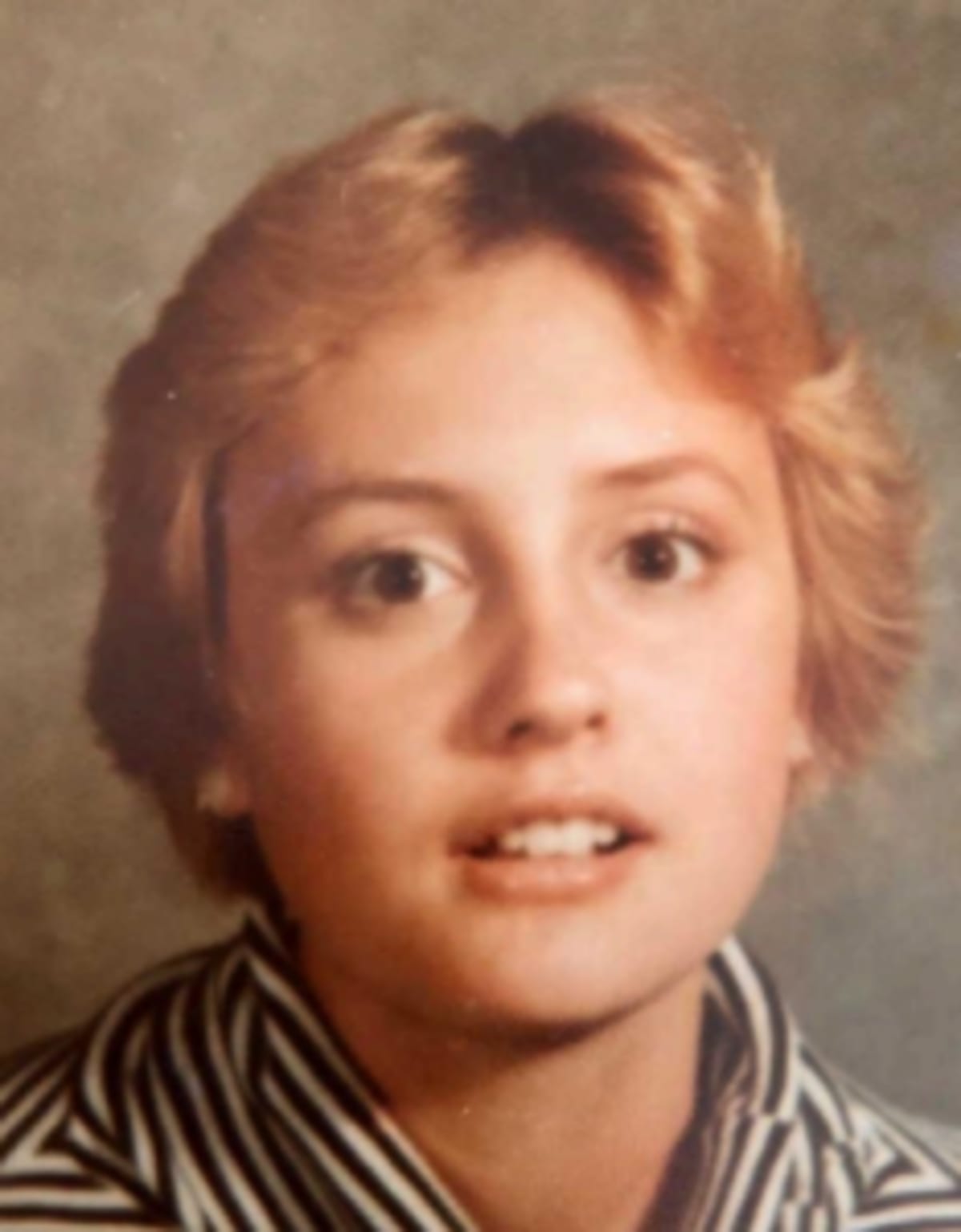
I recently came across a cold case out of Cedar City, Utah, that I had never heard of before. It involves a 15-year-old girl named Phyllis Ady, who disappeared on December 12, 1977. Her name isn't one that comes up very often when people discuss unsolved murders, and after reading through the available records, I wanted to share what happened to her.
Phyllis was living with her aunt and uncle when she went missing. According to the Utah Department of Public Safety, her aunt dropped her off at Hermie's Drive In, where she met someone she knew. Court records provide another detail about that evening. Around 6 p.m., her aunt saw Phyllis meet a classmate near his home. When Phyllis didn't return later that night, her aunt went looking for her. By 1 a.m. on December 13, Phyllis had been reported missing.
For more than two and a half years, her disappearance remained a mystery. Then, on July 2, 1980, someone made a discovery in the backyard of a Cedar City home. Buried about 30 inches underground, inside an old carrot storage pit, were human skeletal remains. The pit had been concealed beneath a wooden trapdoor covered with dirt.
Investigators also recovered clothing and several personal belongings. Phyllis's mother and aunt recognized items found with the remains, and investigators were able to establish that the remains belonged to Phyllis. The medical examiner couldn't determine exactly when she died or what caused her death. However, the circumstances in which her remains were discovered provided evidence that her death involved criminal activity.
The investigation eventually led to the prosecution of John Wilson Petree, who had attended school with Phyllis. A jury convicted him of second-degree murder, and he was sentenced to five years to life in prison. That conviction was overturned by the Utah Supreme Court on February 4, 1983.
After reviewing the evidence, the court determined that prosecutors had not proven beyond a reasonable doubt that Petree was responsible for her death. His conviction was reversed, and he was ordered released from custody. The court acknowledged that the circumstances supported a finding of homicide, but there wasn't enough evidence to establish who had committed it.
What caught my attention while reading the court decision was how much of the investigation centered on statements, witness testimony, and what might have happened that evening. There was no physical evidence connecting the person convicted to Phyllis's death. Reading through the decision also makes it clear why it's important not to treat an accusation or even an overturned conviction as proof of someone's guilt.
Something else stood out to me. I could find considerably more information about the investigation and court proceedings than I could about Phyllis herself. We know her age, where she was living, and some of the events surrounding her disappearance. But there is very little readily available about her interests, her personality, or what she wanted to do with her life.
That's unfortunate, because Phyllis was much more than the circumstances surrounding her death. She was a teenager with a life ahead of her, and nearly 49 years later, the question of who killed her remains unanswered.
When I'm researching cases for my Unsolved America books, I often find myself spending just as much time looking into lesser-known investigations as I do the ones that received national attention. Cases like this are a good example of why. There are decades-old murders that most people have never heard about, even though the families and communities involved have lived with the consequences for years.
As of today, the Utah Department of Public Safety still lists Phyllis Ady's death as an unsolved homicide. I haven't found any publicly confirmed development that establishes who was responsible. That doesn't necessarily mean investigators have stopped working on it, but the information available to the public leaves a great deal unanswered.
I would be interested in hearing from anyone who remembers this case or lived in Cedar City during that period. Sometimes people remember things years later that they didn't think were important at the time. Whether any such information would help this investigation is something only investigators could determine.
Anyone with information about Phyllis's murder can contact the Cedar City Police Department at 435-586-2956 or Utah's Cold Case Tip Hotline at 833-377-7233.
If you have never heard of Phyllis Ady before today, I hope you'll take a few minutes to read about her and share her name. Almost five decades is a long time for a murder to remain unsolved, especially when the victim was only 15 years old.
Scott Anthony Stevens
Sources: Utah Department of Public Safety, Phyllis Ady Cold Case, https://bci.utah.gov/coldcases/phyllis-ady/ and Utah Supreme Court, State v. Petree, 659 P.2d 443 (1983), https://law.justia.com/cases/utah/supreme-court/1983/18015-0.html