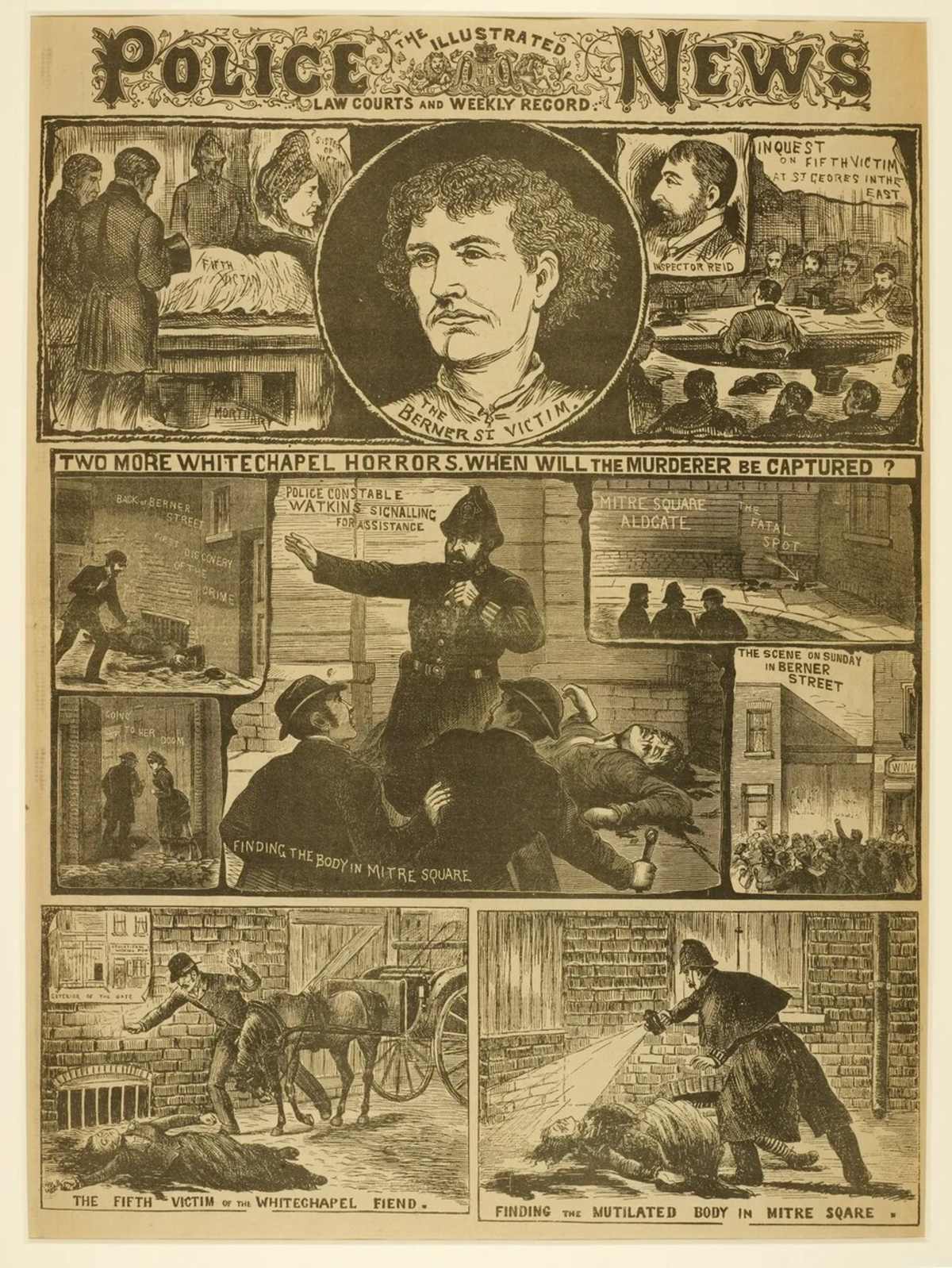
When most people hear the name #JackTheRipper, they immediately think of the dark streets of Whitechapel, London, in 1888. Five women were murdered in a series of killings generally attributed to the unidentified attacker, and despite one of the most famous criminal investigations in history, the killer was never conclusively identified.
What many people may not realize is that the #JackTheRipperCase also has some interesting connections to the United States. Those connections involve an American suspect, an unexplained murder in New York City, and questions that have interested #TrueCrime researchers for generations.
One name frequently discussed is Francis Tumblety, an American who claimed to be a physician and traveled between countries. Tumblety came under suspicion in London during the #WhitechapelMurders. After leaving England, he returned to America in late 1888, where New York detectives monitored his movements. His name would later appear in discussions involving former Scotland Yard officials, but no conclusive evidence has ever established that he was Jack the Ripper.
The American connection becomes even more interesting when examining the murder of Carrie Brown, a woman known as Old Shakespeare, who was killed in New York City in April 1891.
Brown was found murdered inside a lodging house in Manhattan. The circumstances of her death prompted comparisons to the Whitechapel killings, and newspapers questioned whether the notorious London murderer might have crossed the Atlantic. A suspect was convicted of Brown's murder, but the conviction was overturned, and the case remains unresolved.
However, similarities between crimes do not necessarily mean the same individual committed them. Investigators never established a reliable connection between Carrie Brown's murder and the killer who terrorized London.
From an #InvestigativeJournalism perspective, cases like these demonstrate why historical records, contemporary newspaper accounts, police documentation, and corroborating evidence matter so much. A compelling theory may attract attention, but a theory cannot replace evidence.
I find this particular #ColdCase fascinating because it raises questions about how investigators approached crimes before modern forensic science, DNA analysis, and international criminal databases. Traveling between England and America was certainly possible during the late nineteenth century, but establishing that Jack the Ripper actually made that journey is another matter.
More than 138 years after the Whitechapel murders, the killer's identity remains unknown. Whether the answer lies in London's surviving historical records or involves someone with connections to America remains unanswered.
As I continue researching #UnsolvedMurders, #HistoricalColdCases, and #CrimeHistory, stories like this remind me that even the most widely examined investigations can still leave questions unanswered.
So what do you think? Did #JackTheRipper stay in London, or could he have crossed the Atlantic and lived out his life in the United States? I'd be interested in hearing what readers think about this enduring #UnsolvedMystery.
Scott Anthony Stevens
Author and Independent Journalist
Sources for further reading:
Library of Congress, Chronicling America: Historical newspaper coverage of Jack the Ripper and Francis Tumblety.
Smithsonian Magazine: Historical reporting and research concerning Jack the Ripper suspects.
Contemporary New York newspaper coverage of the April 1891 murder of Carrie Brown.
These sources document historical reporting and theories, not proof that Jack the Ripper traveled to America.
October 27, 2026
Jack the Ripper and America: Did London's Most Infamous Killer Cross the Atlantic?